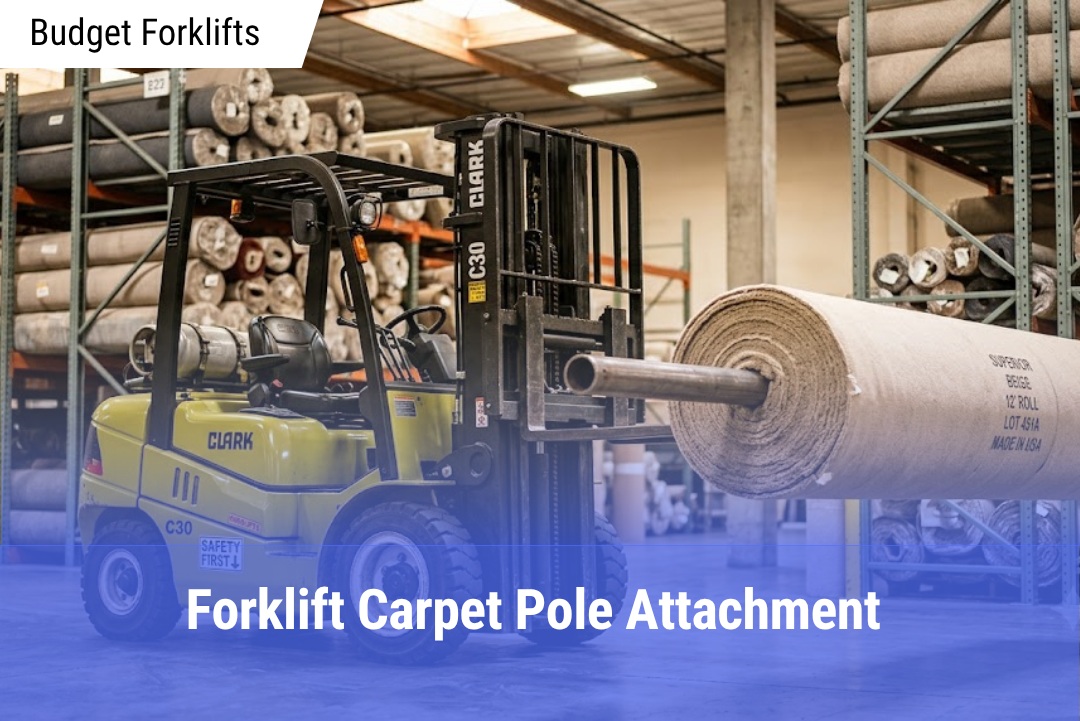
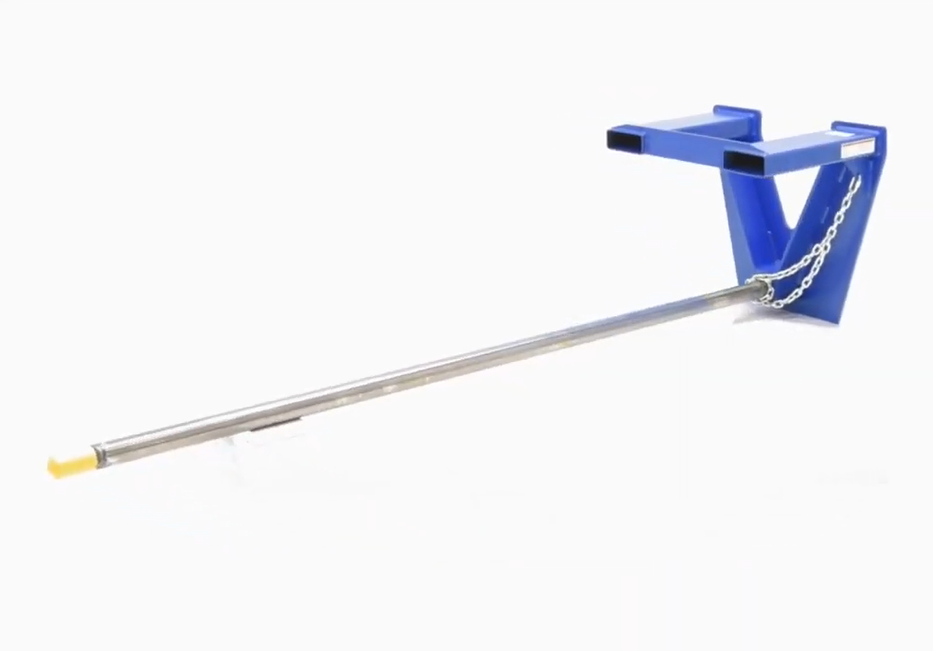
A forklift carpet pole attachment is a tapered, high tensile steel pole that mounts to a forklift’s forks or carriage and lifts rolled materials by sliding through their hollow core. Standard poles run 4 to 12 feet long with rated capacities from roughly 1,800 to 3,800 pounds depending on diameter and length.
You will also hear them called rug rams, carpet rams, rug poles, or stingers. They all describe the same tool. According to manufacturer specification data from Koke Inc., the standard pole diameter is 2.5 inches with a 2,500 pound evenly distributed capacity, while 2.75 inch and 3 inch diameters are available where heavier rolls demand added strength.
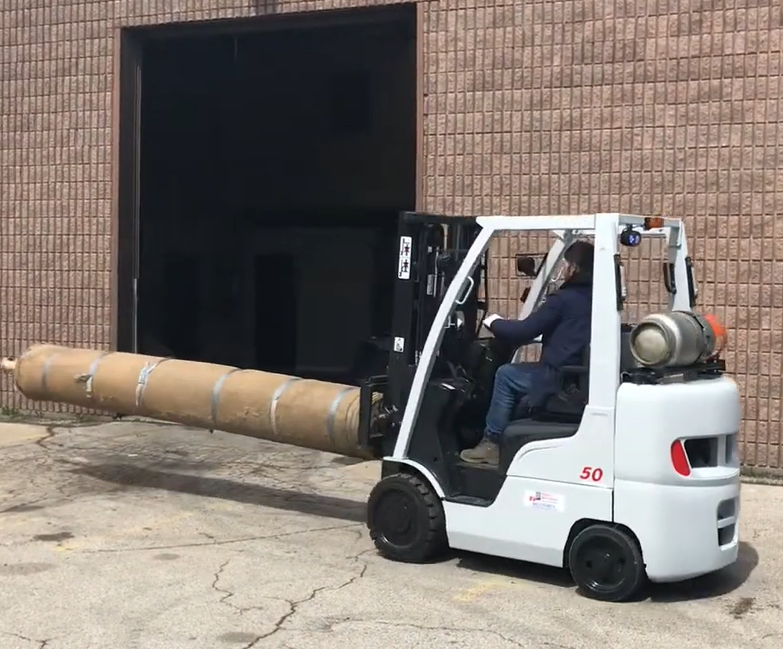
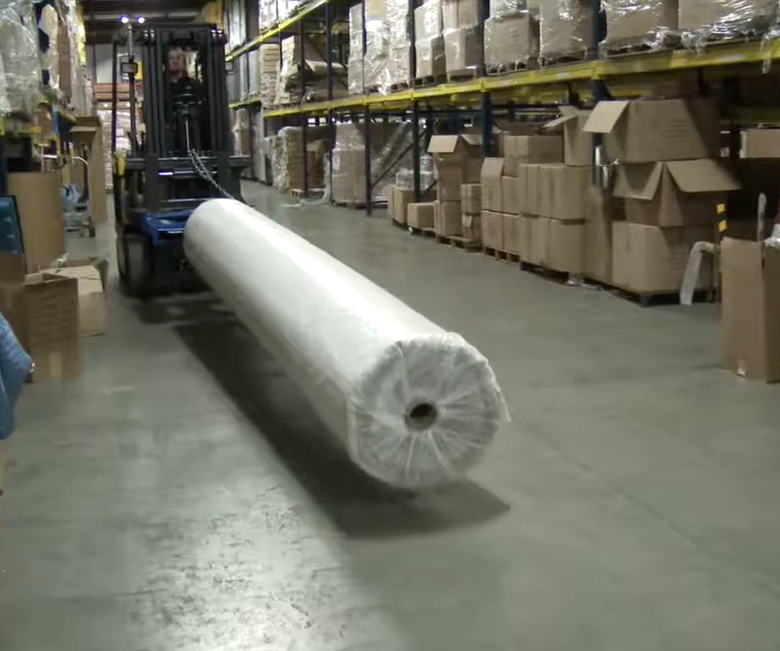
The tapered tip matters more than it looks. It lets the operator thread the pole into a cardboard core without snagging or tearing it, which protects both the product and the core that the next handler will need intact. Because the load hangs on the pole rather than sitting on forks, the roll stays round, stays balanced, and comes off high racking without anyone climbing or manhandling it.
What Are the Three Types of Carpet Pole Mounts?
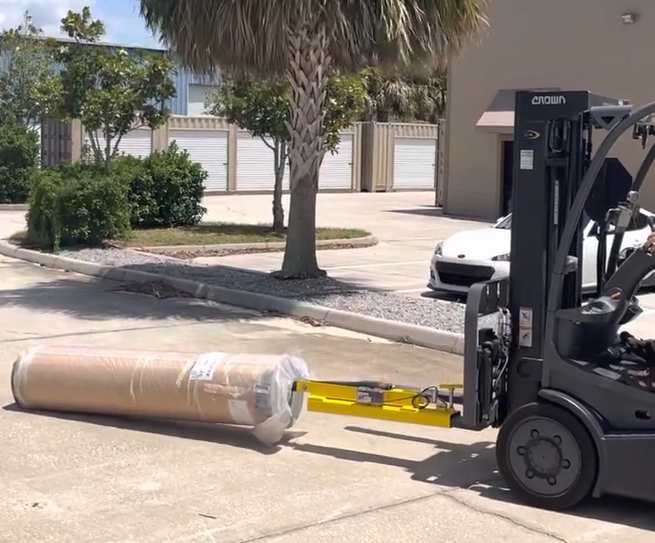
Carpet poles come in three mount styles: fork mounted, carriage mounted, and inverted fork mounted. The right choice comes down to one question: does the same truck also need to run pallets during the shift?
| Mount type | How it attaches | Switchover | Best for | Key limit |
| Fork mounted | Forks slide into fork pockets, secured with a safety chain | Minutes, no tools | Mixed duty trucks that handle pallets and rolls | Pocket size must fit your forks |
| Carriage mounted | Locks directly to the Class II or III carriage with a locking pin, forks removed | Slow, forks must come off | Dedicated high volume roll handling | Truck is committed to the pole |
| Inverted fork mounted | Fork pockets below, pole positioned above the forks | Minutes, no tools | Pulling rolls from tight racking | Roll diameter capped at 30 inches |
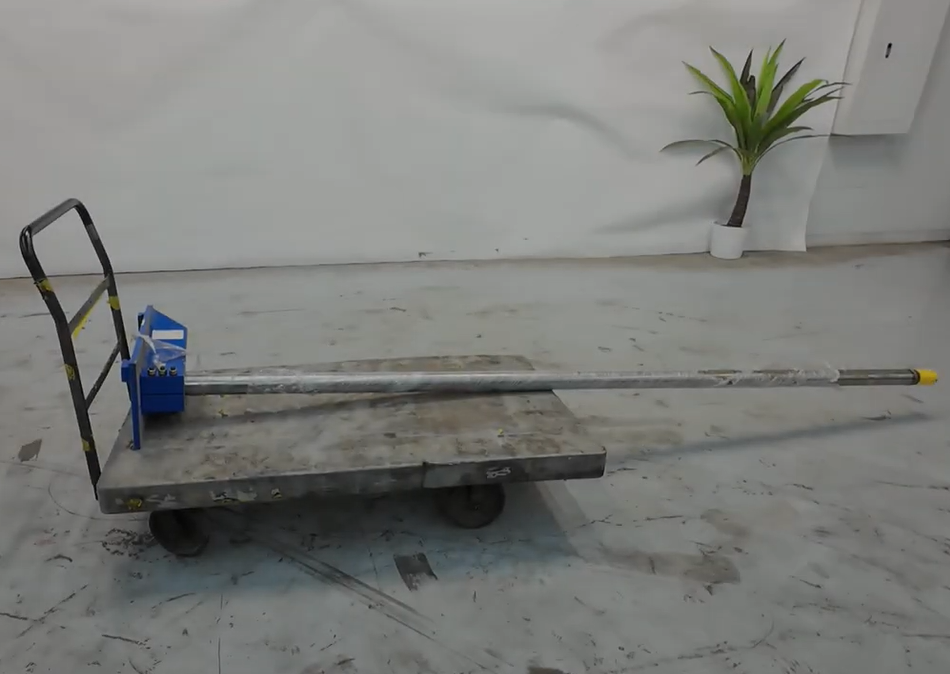
Fork mounted poles are the flexible option. The forks slide into the pockets, the safety chain goes on, and the truck is back to pallets in a few minutes when the roll work is done. Carriage mounted poles trade that flexibility for a more secure, centered connection on the carriage itself, which is why high volume flooring warehouses tend to run them on a dedicated truck. The inverted style places the pole above the forks and, per Koke’s published specifications, is limited to rolls no more than 30 inches in diameter, which makes it a racking tool rather than a general purpose one.
Carriage mounts are built to a specific carriage class, so confirm whether your truck has a Class II or Class III carriage before ordering. A Class III mount will not seat on a Class II carriage.
How to choose a forklift → forklift selection guide
How Much Weight Can a Forklift Carpet Pole Lift?
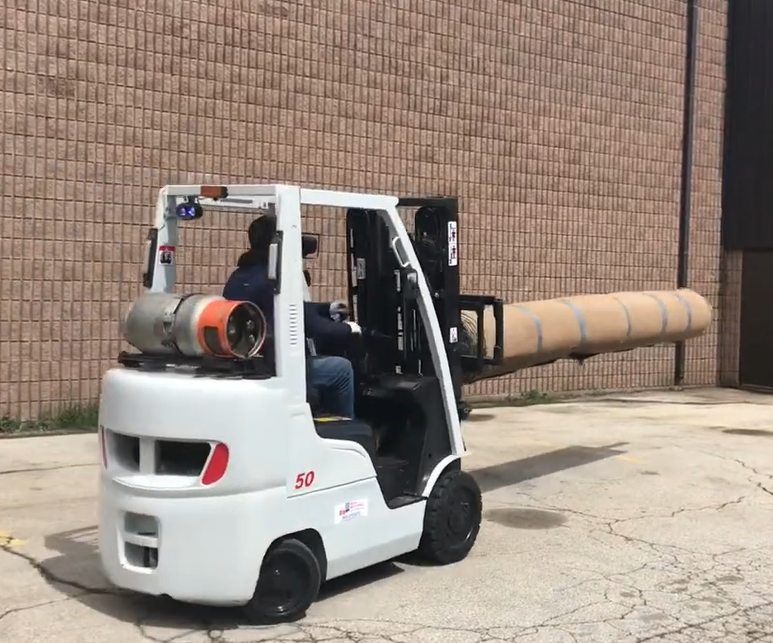
A standard 2.5 inch carpet pole is rated for 2,500 pounds evenly distributed, but the number that matters is capacity at load center, and it falls as the load sits further out on the pole. The same 2.5 inch pole rated 3,000 pounds at a 24 inch load center carries only 2,500 pounds at a 72 inch load center.
Load center is the distance from the pole’s mounting face to the center of the load’s weight. A short, dense coil sitting close to the carriage stresses the pole far less than a long roll whose weight is centered 6 feet out. That is why Koke’s specification tables show a 3 inch diameter pole rated 3,800 pounds at a 24 inch load center on a 4 foot pole, while the 12 foot version of the same diameter is rated 3,000 pounds at 72 inches.
Two practical rules follow from this. First, buy the pole length that matches your rolls, not the longest one available, because extra length costs capacity. Second, the pole’s rating is only half the equation. The truck’s own capacity also drops when an attachment moves the load center forward, so the real limit is whichever number is lower: the pole’s rating at your load center, or the truck’s de-rated capacity with the attachment installed. Your forklift dealer can run that calculation from the truck’s data plate before you buy.
Do You Need Manufacturer Approval to Add a Carpet Pole? (OSHA Rules)
Yes. Under OSHA standard 29 CFR 1910.178(a)(4), modifications and additions that affect capacity and safe operation cannot be performed without the truck manufacturer’s prior written approval, and a front end attachment like a carpet pole falls squarely in that category.
The same standard goes further. Paragraph (a)(5) requires that a truck fitted with a non factory attachment be marked to identify the attachment and show the approximate weight of the truck and attachment combination at maximum elevation with the load laterally centered. In plain terms: the data plate has to change when the pole goes on. A truck running a carpet pole with its original pallet duty nameplate is out of compliance even if nothing ever goes wrong.
Manufacturers are sometimes slow or unwilling to grant approval because of liability concerns. OSHA addressed this in a March 30, 2004 letter of interpretation on the 910.178 standard: if the manufacturer does not respond or responds negatively, written approval from a qualified registered professional engineer who performs a safety analysis is treated as an acceptable path, and OSHA considers the missing manufacturer sign off de minimis in that case. Keep that engineer’s letter on file with the truck’s records.
This is worth doing properly for a simple reason. The approval and the updated data plate are exactly what an inspector or an insurer asks for after an incident, and they cost far less to arrange before the pole ships than after a citation.
Read this article about → Forklift maintenance checklist
How Do You Use a Carpet Pole Safely?
Operators must be trained on fork and attachment adaptation, operation, and use limitations before running a carpet pole, and OSHA requires retraining whenever a new attachment is added to a truck. The training requirement sits in 29 CFR 1910.178(l)(3)(i)(G), the same standard that governs the attachment itself.
One rule surprises even experienced operators: under paragraph (o)(4) of that standard, a forklift carrying an attachment with no load on it must be handled as a partially loaded truck. The pole’s own weight, hanging forward of the carriage, has already shifted the truck’s center of gravity before the first roll goes on.
Day to day, safe carpet pole work comes down to a short list. Insert the pole fully through the core before lifting, and keep the roll seated against the backplate rather than hanging on the tip. Travel with the load low and tilted slightly back. Never let anyone stand under or beside a suspended roll. Confirm the safety chain is attached on fork mounted units every single time, because the chain is what keeps the attachment from sliding off during a sudden stop. And fold the pole into the truck’s scheduled inspection routine: check load bearing welds for cracks, look for any bend or deformation in the pole, and pull a damaged pole from service immediately, since a bent pole concentrates stress instead of spreading it.
What Else Can a Carpet Pole Move Besides Carpet?
A carpet pole handles any material wound on a hollow core or formed with a hollow center. Per Koke’s application data, that includes vinyl flooring rolls, textile and fabric rolls, coiled hoses and cables, synthetic turf, rubber roofing, and PVC, all up to the pole’s rated capacity.
Shorter poles double as coil rams for steel and wire coils, and the pole can slide into the open end of large diameter pipe to move it around a yard, which is why plumbing and construction operations buy them without ever touching carpet. If your operation only needs roll handling for a season or a single project, renting a truck with the attachment already approved and marked is often cheaper than buying and certifying a pole for a machine you own.
Read this article → forklift rental mistakes
FAQ
What diameter carpet pole should I choose?
Match the diameter to your heaviest rolls at their real load center, not the sticker capacity. A 2.5 inch pole covers most carpet and flooring work, while 2.75 and 3 inch poles add capacity for dense coils and long, heavy rolls.
What is the difference between a Class II and Class III carriage mount?
The class refers to the forklift carriage size the mount is machined to fit, with Class II common on trucks up to about 5,500 pounds capacity and Class III on larger trucks. Check your truck’s carriage class before ordering because the mounts are not interchangeable.
Can one person install a carpet pole?
Fork mounted poles are a practical one person job since the forks do the lifting and only the safety chain needs securing. Carriage mounted poles are heavy and require removing the forks first, so plan on two people or a hoist.
Is a carpet pole the same as a fork extension?
No. Fork extensions are flat sleeves that lengthen the forks for oversized palletized loads, while a carpet pole is a single round bar that lifts rolled goods through their core.
Conclusion
A carpet pole attachment turns a standard forklift into a purpose built roll handler, but getting it right takes more than picking a length off a catalog page. Choose the mount style around how the truck spends its shift, size the pole to your rolls rather than defaulting to the longest option, and read capacity at your actual load center instead of the headline number. Then close the compliance loop: written approval for the attachment, an updated data plate on the truck, and operators trained on the pole before the first lift.
Handled that way, a carpet pole pays for itself quickly in faster roll moves, fewer damaged cores, and no one wrestling heavy rolls by hand. If you are weighing whether to buy a pole for a truck you own or rent a machine with the attachment already approved and marked, talk it through with a dealer who can run the numbers for your rolls and your racking before you commit.