Understanding the specific benefits and limitations of each forklift type helps you solve material handling challenges effectively. Instead of just looking at the initial price tag, evaluating your facility’s layout, indoor ventilation, and shift schedules will guide you to the machine that delivers the best end results for your business.
Table of Contents
Core Differences Between Electric and Propane Forklifts
The core difference is the power source: electric forklifts run on rechargeable industrial batteries, while propane forklifts burn liquid petroleum gas in an internal combustion engine. That single factor changes everything about their maintenance, operating environment, and total cost of ownership.
Electric forklifts operate on large industrial forklift batteries, either traditional lead-acid or newer lithium-ion technology. Because they run entirely on electric motors, they burn no fuel, produce zero tailpipe emissions, and operate quietly with far fewer moving mechanical parts.
Propane forklifts, also called LPG lifts, work much like a traditional automobile engine. They carry a metal cylinder of liquid propane on the back. When the fuel runs out, the operator unbuckles the empty tank, clamps on a full one, and gets straight back to work.
Indoor Warehouse Excellence: The Case for Electric
Electric forklifts are the better choice for enclosed warehouses and distribution centers. They protect indoor air quality, cost less to run per shift, and fit into tighter aisles than any combustion model.
Health, Safety, and Air Quality
Electric lifts produce zero emissions, so you completely eliminate the risk of carbon monoxide building up inside your facility. OSHA specifically warns that internal combustion forklifts can push carbon monoxide to dangerous levels in enclosed work areas, and the agency caps worker exposure at 50 parts per million averaged over an eight-hour shift. Going electric removes that compliance worry entirely, and it saves you the cost of installing heavy-duty commercial ventilation to clear exhaust fumes.
Lower Long-Term Operating Costs
Electric forklifts cost more on day one but less every day after. Charging a battery overnight on your local grid is substantially cheaper than buying propane week after week, and electric motors never need engine oil changes, spark plugs, or transmission flushes. A simple electric forklift maintenance routine covers most of what these machines require, which keeps your annual service bills low.
Lead-Acid vs Lithium-Ion: Know Your Charging Times
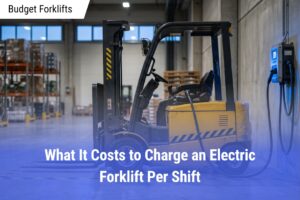
Not all electric forklifts recharge at the same speed. A conventional lead-acid battery can keep a machine out of service for up to 16 hours between charging and cooling, while lithium-ion batteries can be topped up during lunch breaks and shift changes without damage.
That difference matters if you run more than one shift. Lead-acid fleets often need spare batteries and a swapping station to stay productive, while lithium-ion units simply plug in whenever the operator steps away. Proper care also stretches the life of either type, so it pays to learn how to make your forklift battery last longer before committing to a charging strategy.
Space Optimization and Maneuverability
Electric forklifts turn tighter because the heavy battery doubles as the counterweight. Without a bulky engine and fuel tank on the frame, the machine stays compact and the turning radius shrinks. That lets your operators navigate narrow aisles safely, which means you can place your racking closer together and store more inventory in the exact same warehouse footprint.
Outdoor and Heavy-Duty Muscle: Why Propane Excels
Propane forklifts win outdoors and in nonstop multi-shift operations. They refuel in minutes, hold full power to the last drop of fuel, and handle rough ground that would stop an indoor electric model.
Uninterrupted Shift Productivity
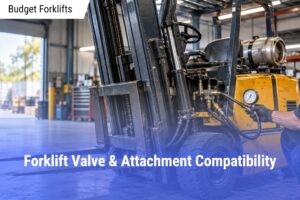
The biggest benefit of an LPG forklift is that it never waits for a charger. Swapping an empty propane tank for a full one takes less than five minutes, so the machine keeps earning through back-to-back shifts while a depleted electric unit sits on a charger. For busy loading docks running around the clock, that uptime is the whole argument.
Consistent Power and Terrain Adaptability
A propane engine delivers its full torque and lifting capacity until the last drop of fuel is burned. A draining lead-acid battery, by contrast, can lose some travel and lifting speed toward the end of a shift. Propane models are also built with higher ground clearance and rugged pneumatic tires, which lets them drive safely over gravel, dirt yards, and rough loading docks. Those tires take a beating on hard surfaces, so knowing when to replace forklift tires is part of keeping an outdoor fleet safe.
Lower Initial Purchase Price
Propane forklifts cost less to buy because there is no battery or charger to pay for. You also keep your warehouse floor space, since no dedicated charging and battery-swapping station is needed. If cash flow is tight, that lower entry point matters, and flexible forklift financing options can spread even that smaller investment over manageable payments.
Comparing Total Cost and Performance Requirements
Fuel is the number that separates the two machines over time. Propane prices move week to week, which is why the U.S. Energy Information Administration publishes a weekly propane price update every heating season. A standard 33 lb forklift cylinder holds roughly 8 gallons, so even a 25-cent swing per gallon changes your cost by about 2 dollars per tank, on every tank, all year. Electricity rates are far more stable, which makes electric operating budgets easier to predict.
Use this quick comparison to match each machine to your daily operations:
| Operational Feature | Electric Forklift | Propane (LPG) Forklift |
|---|---|---|
| Best Environment | Indoors, food facilities, narrow aisles | Outdoors, lumber yards, busy docks |
| Refueling Time | Hours on a charger (minutes for lithium-ion top-ups) | Under 5 minutes (quick tank swap) |
| Upfront Investment | Higher (includes battery and charger) | Lower |
| Ongoing Maintenance | Very low (fewer moving parts) | Higher (engine tuning, oil, filters) |
| Fuel Cost Stability | Stable electricity rates | Fluctuates with weekly propane prices |
| Emissions Level | Zero | Produces carbon monoxide, needs ventilation indoors |
Conclusion: Making the Right Investment for Your Fleet
The right choice comes down to your daily workflow: electric for clean, quiet, low-cost indoor operations, propane for rugged outdoor work and nonstop multi-shift schedules. Match the machine to the environment and you solve your biggest material handling problems before they start. If you want expert eyes on that decision, the team at Illinois Industrial Equipment, Inc. can walk you through both options, including proven machines from our used forklift inventory that fit tighter budgets.
FAQs
Which forklift is better for indoor warehouses: electric or propane?
Electric forklifts are the best choice for indoor warehouses. They produce zero exhaust emissions and operate quietly. This keeps indoor air quality safe for workers and eliminates the need to install expensive warehouse ventilation systems.
Do electric forklifts lose lifting power when the battery gets low?
Yes, traditional electric forklifts can experience a drop in travel speed and lifting power as the battery drains during a shift. Propane models deliver full power until the gas tank is empty. This is why experts at Illinois Industrial Equipment, Inc. recommend propane for heavy continuous lifting jobs.
How long does it take to refuel a propane forklift compared to charging an electric one?
Swapping an empty propane tank for a full one takes less than five minutes. Recharging a standard electric forklift battery requires taking the machine out of service for several hours to charge and cool. You must buy extra batteries if your warehouse runs back to back shifts.
Why do electric forklifts have a tighter turning radius than propane models?
Electric forklifts use their heavy battery as a built in counterweight. This allows for a compact machine without a bulky engine or external fuel tank. This design gives them a tight turning radius, helping operators safely navigate narrow aisles and store more inventory in the exact same space.
Are electric forklifts cheaper to maintain than liquid propane gas lifts?
Yes, electric models cost less to maintain because electric motors have very few moving parts. With a propane lift, you must pay for regular engine tune ups, oil changes, spark plugs, and transmission flushes. The specialists at Illinois Industrial Equipment, Inc. urge buyers to consider these costs when calculating long term budgets.
Can a propane forklift safely drive over rough outdoor gravel or dirt?
Yes, propane forklifts are built for tough outdoor environments. They feature higher ground clearance and rugged pneumatic tires. This heavy duty design allows them to drive over uneven gravel, dirt lumber yards, and rough loading docks without getting stuck or damaging the machine.
Do you need a special ventilation system if you use an electric forklift inside?
No. Because electric lifts run on battery power and produce zero emissions, you do not need large exhaust fans. Choosing electric solves OSHA compliance worries regarding carbon monoxide buildup. It is the safest and cheapest option for enclosed distribution centers and food storage facilities.
What is the biggest hidden cost of buying a propane forklift?
The biggest ongoing costs for propane forklifts are liquid petroleum gas purchases and regular engine maintenance. While they are cheaper to buy upfront, consulting an authority like Illinois Industrial Equipment, Inc. helps you calculate if daily fuel expenses will cost more than an electric model over ten years.
Is the initial purchase price higher for an electric or a propane forklift?
An electric forklift requires a higher upfront investment because you must purchase the battery and set up a charging station. Propane lifts are cheaper on day one because they lack these electrical components. This makes them a great option for businesses with a tight immediate budget.
Which type of forklift is best for a business that runs continuous 24 hour shifts?
For 24 hour operations, propane forklifts usually win because they eliminate machine downtime. You simply swap the gas tank in five minutes and keep moving. If you want the clean air benefits of electric lifts for continuous indoor shifts, the team at Illinois Industrial Equipment, Inc. can help you set up a multi battery swapping station so your machines never stop working.