Why the Data Plate Matters
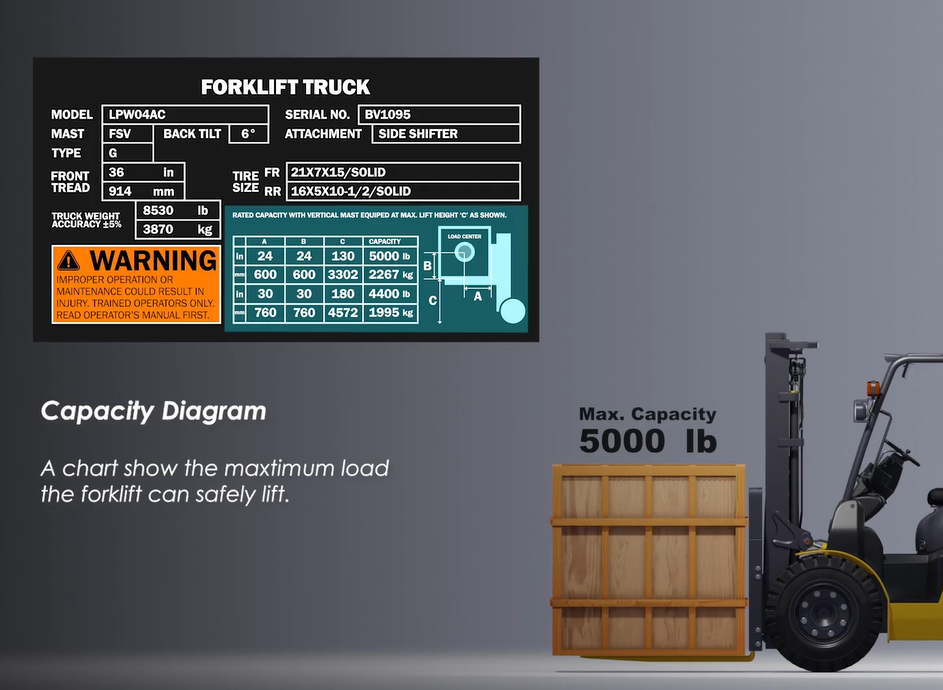
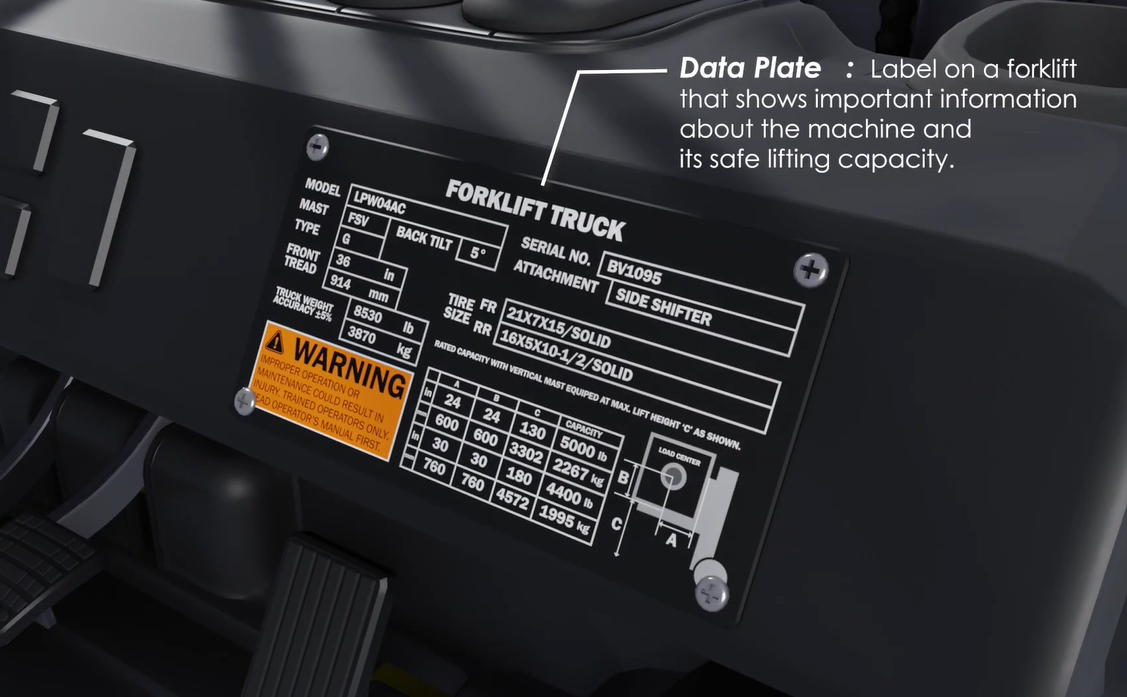
The data plate is the forklift’s official record of what it’s designed to do, and skipping it means you’re guessing at the machine’s real limits. Every forklift has a metal or plastic plate fixed to it, usually near the operator’s seat, and this isn’t just a sticker.
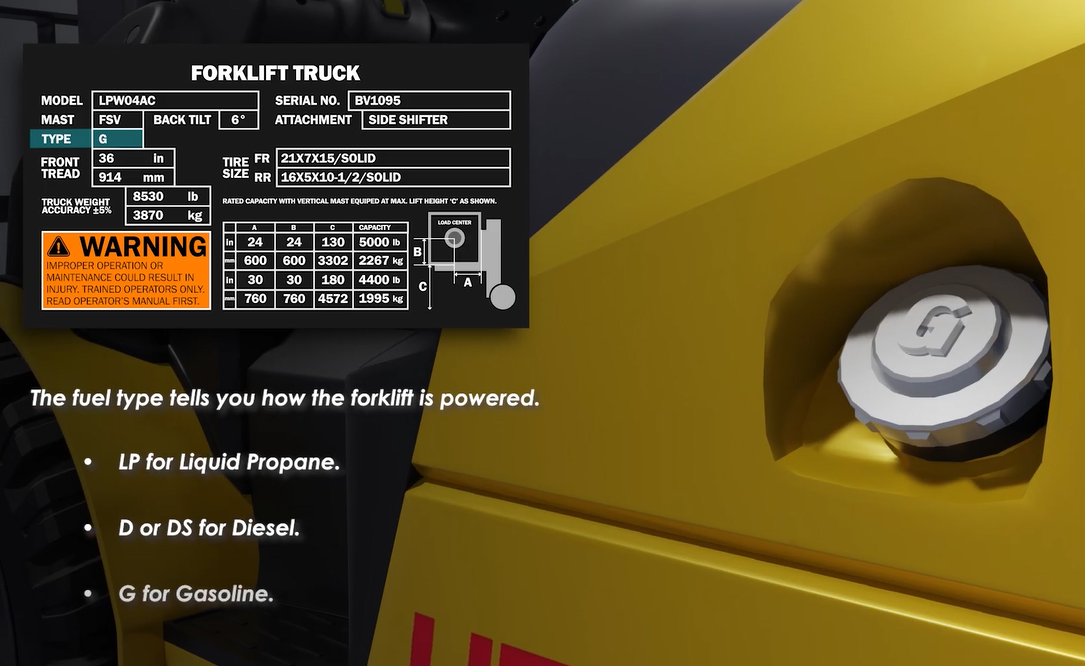
The data plate shows you:
- How much weight the forklift can carry.
- At what height it can safely lift that weight.
- What type of tires it needs.
- Information about the mast and attachments.
- Identification details like serial and model numbers.
Ignoring this information is one of the fastest ways to end up with the wrong forklift for your job. Worse, it can put operators at risk of tipping accidents or damaged loads.
Common Mistakes Buyers Make
Most buyers who get burned made one mistake: they trusted the seller’s word instead of the plate. Common mistakes include:
- Assuming the forklift can handle any load size. In reality, every forklift has strict limits.
- Not checking the load center. A pallet that’s too long or heavy in the wrong spot can cause tipping.
- Overlooking attachments. Adding a clamp, fork positioner, or extension can reduce safe lifting capacity.
- Ignoring mast height. A forklift rated for 5,000 lbs at a low height may only handle 3,000 lbs when lifting higher.
By knowing how to read the plate, you can avoid being misled by appearances.
What Information Is Found on a Forklift Data Plate
The plate may look like a jumble of numbers, but every section has a specific job. Here’s what you’ll typically find:
- Load Capacity (in pounds or kilograms).
- Load Center (distance from the fork face to the load’s center of gravity).
- Lift Height (maximum safe lifting height).
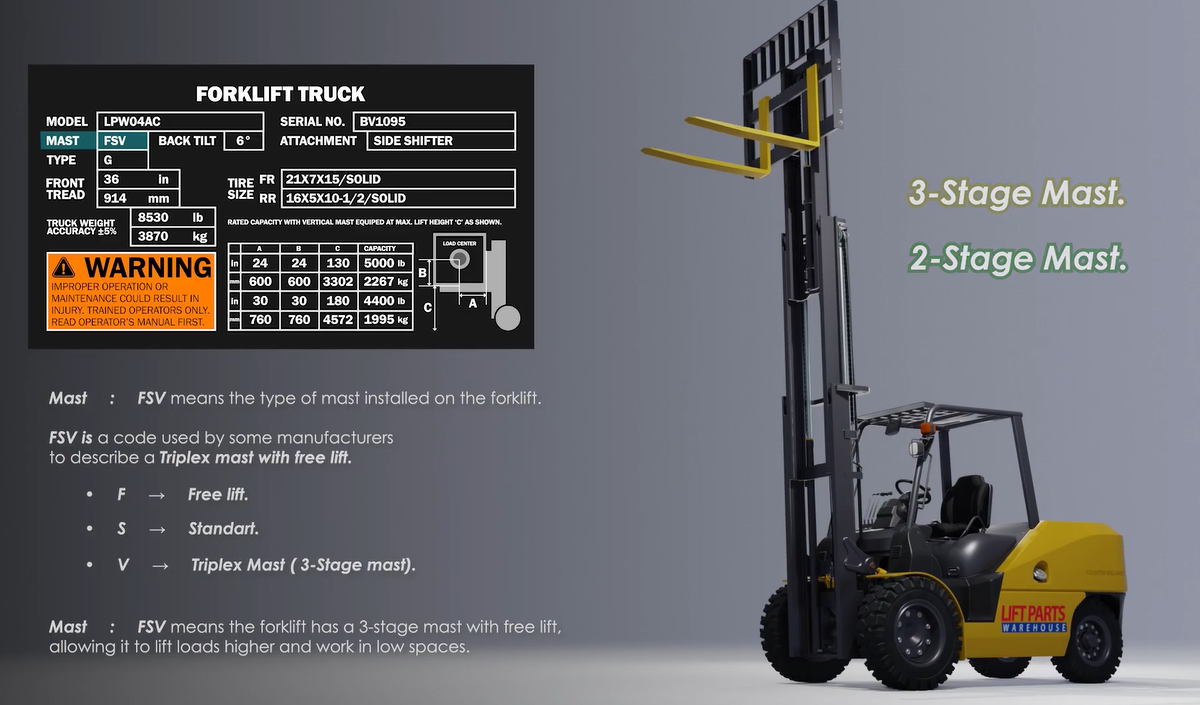
- Mast Type (simplex, duplex, triplex, etc.).
- Attachment Information (if the forklift has clamps, rotators, or side shifters).
- Tire Type and Size (pneumatic, cushion, solid, etc.).
- Truck Weight (important for transport and warehouse floor limits).
- Model and Serial Numbers (for tracking and service).
Each of these details helps you decide if the forklift suits your specific job.
Understanding Load Capacity
Load capacity tells you the maximum weight the forklift can safely lift, but only under the exact conditions listed on the plate. It’s the headline number most buyers focus on first, and for good reason.
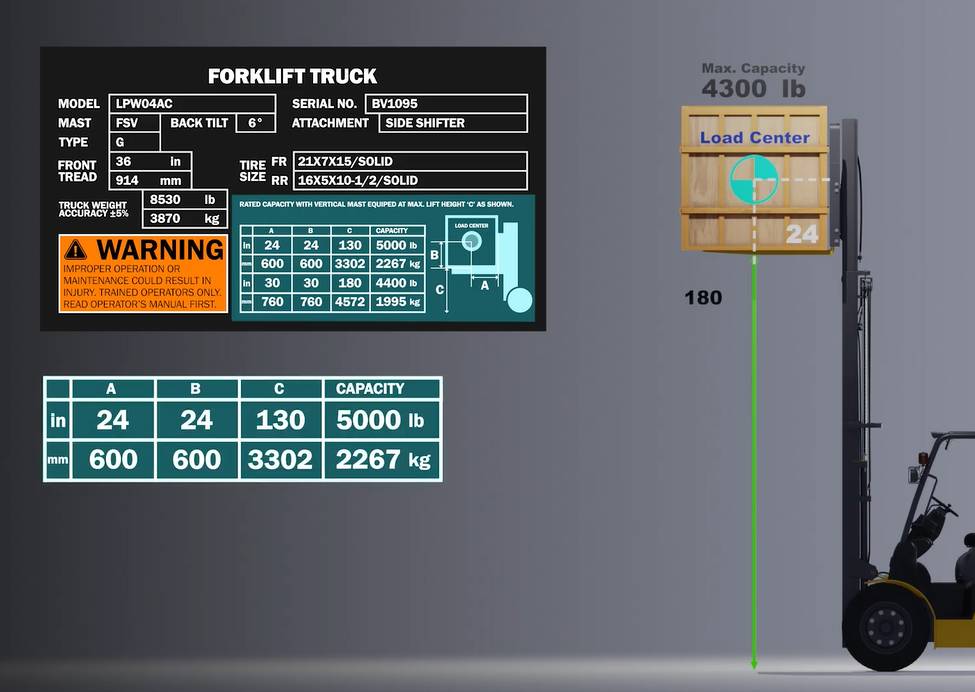
For example, if the data plate says 5,000 lbs at a 24-inch load center, that means the forklift can lift that weight only if the load’s center of gravity is 24 inches from the fork face. If your load is longer, wider, or heavier in one direction, the safe capacity drops.
This is why checking load capacity is our favorite part of the plate. It gives you a true sense of the forklift’s power and prevents overloading, which is one of the top causes of workplace accidents.
The Importance of Load Center
The load center is the balance point of the forklift’s cargo, and getting it wrong is what actually causes most tip-overs, not the raw weight itself. Think of it like balancing a seesaw: the farther the load sticks out, the harder the forklift has to work to stay upright.
This balance is really about keeping the machine’s combined center of gravity inside what OSHA’s stability guidelines for powered industrial trucks call the stability triangle, the safe zone formed by the front wheels and the pivot point of the rear axle. Once your load pushes that center of gravity outside the triangle, the forklift tips.
A standard load center is 24 inches, but special loads like oversized pallets, barrels, or long materials can shift this number dramatically. When that happens, your forklift’s real lifting power might be half of what the plate says. Always compare your typical load dimensions to the data plate to make sure they align.
How Mast Height Changes Capacity
The higher you lift, the weaker the forklift becomes, because raising the load shifts the center of gravity upward and eats into your stability margin. This is why the same forklift can be rated for very different weights depending on how high you’re lifting.
On the plate, you’ll usually see a chart showing weight limits at different mast heights. For example:
- 5,000 lbs at 10 feet.
- 4,000 lbs at 15 feet.
- 3,200 lbs at 20 feet.
If your warehouse has tall racking, don’t just look at the biggest weight number. Check the actual heights you’ll be using against your storage or used forklift inventory options before you commit to a machine.
Tires and Attachments: What They Tell You
The type of tires matters more than most buyers realize, and the plate tells you exactly what the forklift was built for. Cushion tires are best for smooth indoor floors, while pneumatic tires are needed for rough outdoor ground. The plate lists the tire size the forklift was designed for, and using the wrong ones can reduce stability and even damage the machine.
Attachments work the same way, but in reverse. A forklift with a side shifter or rotator loses lifting capacity because of the added weight and the shift in load center, a process known as derating. The data plate should list this adjusted, derated number. If it doesn’t, ask the seller for an updated plate before you buy.
Serial Numbers and Model Numbers Explained
The serial and model numbers are the forklift’s identity card, and they’re what you’ll need for parts, service, and history checks. They’re essential for ordering parts, scheduling maintenance, and verifying the forklift’s history.
A missing or scratched-out serial number is a red flag. It could mean the forklift has been stolen, tampered with, or pieced together from other machines. Always verify that these numbers match the paperwork.
Safety Features Hidden in Plain Sight
Some plates carry warnings most buyers skim right past, and those small notes are worth a second look. Look for:
- Maximum tilt angles.
- Warnings about uneven ground.
- Battery or fuel type requirements.
These details help keep both the operator and the load safe.
How to Spot a Tampered or Fake Plate
Not every forklift on the market is honestly represented, and a tampered plate is one of the easiest ways to hide a problem machine. Signs of tampering include:
- Freshly riveted or scratched plates.
- Numbers that don’t match the forklift’s size or model.
- Stickers covering the original plate.
If you notice any of these, walk away, it’s not worth the risk. And if a plate is missing or too worn to read altogether, treat that as a dealbreaker too: it isn’t just a cosmetic issue, keeping the nameplate legible is a federal requirement for any powered industrial truck in service.
Practical Tips Before Buying
Here’s a step-by-step way to use the data plate when shopping:
- Compare the load capacity and load center to your actual job needs.
- Check the lift height ratings against your warehouse racking or storage.
- Make sure the tire type and size fit your operating environment.
- Verify that attachments are listed and properly adjusted on the plate.
- Inspect the serial and model numbers for accuracy.
- Look for signs of tampering or missing information.
Doing this takes just a few minutes but can save thousands in repairs, downtime, or accidents. If the numbers don’t line up with your budget, it’s worth comparing forklift financing options before you rule out a machine that otherwise fits the job.
Final Thoughts
A forklift data plate is more than just a label, it’s a roadmap for safety, performance, and smart purchasing. Understanding how to read it helps protect both your investment and your team.
One of the most important things to check is the load capacity rating, as it shows what the forklift can handle in real-world conditions. But every detail counts, from load center to mast height and attachments; each specification provides key insights.
For added confidence, our team can walk you through what a plate is really telling you and help you match it against your job before you buy. Reach out to our forklift experts if you want a second set of eyes on a machine before you sign anything.