
Blog Post
Battery Acid Spill in the Charging Area: Immediate Steps for the First 30 Minutes
| | 12 min read
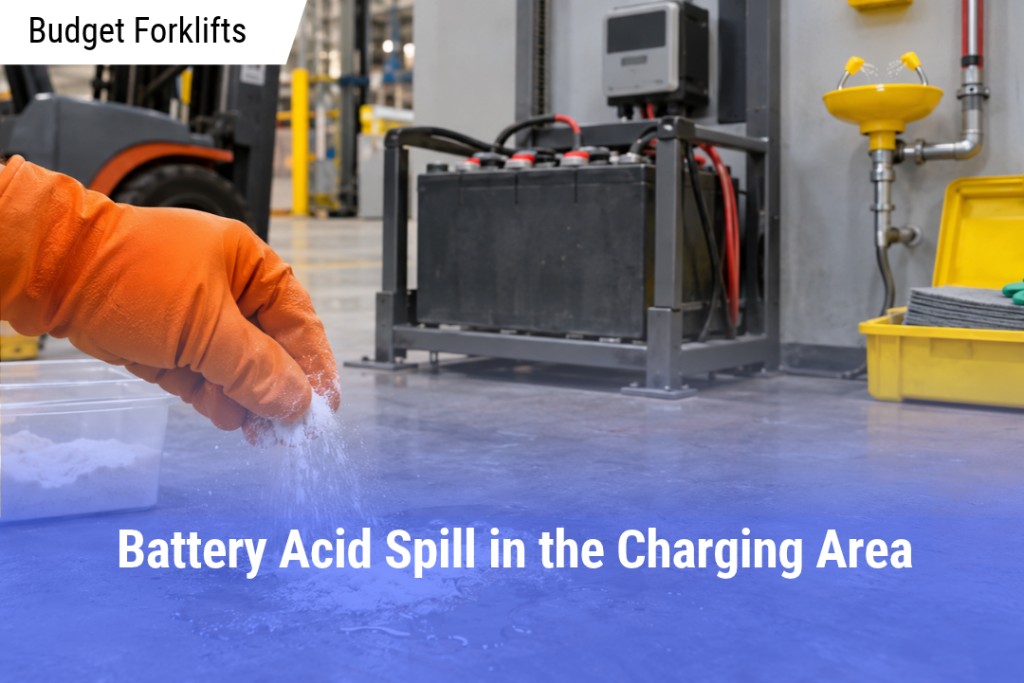
Battery acid spill in the charging area? Follow these immediate steps to protect workers, neutralize the acid, and check the forklift before reuse.
Quick answer: When battery acid spills in a forklift charging area, protect people first: move everyone out of the splash zone, turn the charger off, and put on acid-resistant PPE. Then contain the spill, neutralize it with baking soda until the pH reads 6 to 8, absorb it, and keep the truck out of service until the battery and compartment are inspected.
A lead-acid forklift battery holds dilute sulfuric acid, and the charging area is where it most often ends up on the floor. The order of your first moves matters more than the cleanup itself. As a used forklift dealer, we also see the other end of the story: the trucks and batteries that come through our shop months after a spill, still corroding where nobody looked. Below, we cover both.
What should you do first when battery acid spills in the charging area?
Get people out of the splash zone, turn the charger off, and put on acid-resistant PPE before anyone touches the spill. The puddle can wait a minute. A worker with acid in their eyes cannot, and a charging battery near spilled electrolyte still gives off hydrogen.
Work through these moves in order:
- Clear the area. Send anyone not involved in the response away from the charging bay, and stop forklift traffic through it so tires do not track acid across the floor. If a battery has fallen or a case has split badly, use the same judgment you would for when to evacuate a work area.
- Check for anyone splashed. Eye and skin exposure goes to the eyewash or shower immediately, ahead of any cleanup.
- Turn the charger off at its switch or disconnect. Do not yank the battery connector apart while current is flowing. A spark near a gassing battery is the one thing that turns a mess into an explosion.
- Keep ventilation running. Do not shut off exhaust fans to "contain" the smell.
- Suit up. Chemical splash goggles or a face shield, rubber or neoprene gloves, an acid-resistant apron, and boots.
All of that only works if the equipment is already there. OSHA's guidance on a properly equipped battery charging area lists an eyewash able to deliver a 15-minute flow, a ready water supply for flushing spilled electrolyte, soda ash or another neutralizer nearby, a phone for emergencies, and a plumbed drench shower for large installations.
The most common first-minute mistake we hear about is someone grabbing a hose and washing the acid toward a drain. That spreads the spill, sends untreated acid into the plumbing, and splashes whoever is holding the hose.
How do you treat battery acid on skin or in the eyes?
Flush with clean, lukewarm, gently flowing water right away, and do not stop early. OSHA's sample procedure calls for 15 minutes, while Canada's occupational safety agency says at least 30. Treat 15 minutes as the minimum and keep flushing until medical help takes over.
For eyes, OSHA's sample steps are to remove safety glasses, flush in the eyewash for 15 minutes, get medical attention immediately, and report the incident. The Canadian Centre for Occupational Health and Safety goes further, advising that you flush for at least 30 minutes without interruption while holding the eyelids open, keep the rinse water away from the unaffected eye, and continue flushing on the way to emergency care if it is safe to do so.
For skin, remove acid-soaked clothing while still under the water, including watch bands, belts, and other leather items that hold acid against the skin. Get medical attention for any redness or burns.
Contact lenses deserve a specific rule. A lens can trap acid against the eye and make it harder to flush, which is why OSHA advises workers who wear contacts to use chemical splash goggles during charging. Anyone helping a splashed coworker should wear gloves and eye protection too.
What do you use to neutralize forklift battery acid?
Use baking soda or soda ash, mixed at about 1 pound of baking soda per gallon of water, and work it in from the edges of the spill toward the center. Commercial acid neutralizer from a battery spill kit works the same way and often changes color when the job is done.
The baking soda ratio comes straight from OSHA's sulfuric acid spill procedure for forklift batteries, which also says to contain a very large spill with earth or clay dikes. Ring the spill with neutralizer or absorbent socks first so it stops spreading, then cover the rest.
What not to use matters just as much. Skip strong bases such as caustic soda or drain cleaner, because a strong base meeting a strong acid reacts violently and throws heat and spatter. Plain water alone dilutes the acid without neutralizing it, and sawdust or rags leave you with acid-soaked waste that is still corrosive.
Battery acid spill response at a glance
| Phase | Action | Why it matters |
|---|---|---|
| First 60 seconds | Clear people, stop traffic, send anyone splashed to the eyewash or shower | Eye and skin injuries worsen with every second of contact |
| First 5 minutes | Turn the charger off, keep ventilation on, put on goggles, gloves, apron, and boots | Removes the spark and hydrogen risk before anyone kneels at the spill |
| Contain and neutralize | Ring the spill, then apply baking soda solution or kit neutralizer from the edges inward | Stops the acid reaching drains, racking, and other trucks |
| Confirm | Wait for fizzing to stop, then test with a pH strip for a reading of 6 to 8 | No fizzing on top can hide live acid underneath |
| Clean up | Absorb, bag and label the waste, rinse the floor and battery top, check local disposal rules | Residue keeps corroding floors, trays, and connectors |
| Before reuse | Inspect the battery case, tray, compartment, and cables; record the incident | The spill is often a symptom of a battery or charging problem |
How do you know battery acid is fully neutralized?
The reaction is finished when the fizzing stops and a pH strip pressed into the slurry reads between 6 and 8. Fizzing alone is not proof, because neutralizer sitting on top of a pool can stop bubbling while acid underneath is still live.
Test in more than one spot, especially at the low point of the floor and anywhere the acid ran under the charger or a battery stand. If any reading comes back below 6, add more neutralizer and test again. Keep a pack of pH strips inside the spill kit, not in a supervisor's desk drawer, so nobody has to guess.
How do you clean up and dispose of a neutralized acid spill?
Absorb the neutralized slurry with spill pads or clay, bag and label it, rinse the area with clean water, and confirm disposal with your local environmental authority. Never hose neutralized or untreated electrolyte into a floor drain.
Spent battery acid residue can carry lead, so do not assume it can go in the general trash. OSHA's procedure ends with two steps that get skipped most often: report the incident to a supervisor, and contact local environmental authorities about proper disposal. Bag used pads and contaminated PPE together, label the bag, and store it away from the charging bay until it is collected.
Then write it down. Note the date, the truck and battery involved, who responded, any injuries, and what caused the spill. That entry belongs alongside your other forklift inspection and incident records, and it is the first thing you will want if the same battery leaks again.
Is the battery or forklift safe to use after an acid spill?
Not until someone has inspected the battery case for cracks, the tray and compartment for corrosion, and the cables and connectors for damage. A clean floor does not mean a clean truck, because acid that ran into the compartment keeps eating steel long after the cleanup is done.
From the dealer side, acid damage shows up in predictable places when electric trucks come through our shop. The battery tray and the floor of the battery compartment take the worst of it, followed by cable lugs and connector housings, then any steel brackets, wiring, or hydraulic fittings sitting below the battery. Surface rust on those parts is easy to dismiss, and that is exactly how a minor spill turns into a structural or electrical repair later.
Before the truck goes back to work, check:
- The battery case, cell covers, and vent caps for cracks or bulging
- Electrolyte levels in each cell, since a spill usually means some cells lost acid
- Cables, lugs, and the connector for corrosion or heat damage
- The tray and compartment floor, neutralized and rinsed, not just wiped
- Battery hold-downs, which must secure the battery as the manufacturer intended
A battery that leaks once is worth investigating rather than refilling. Many of the root causes covered in our guide to what causes forklift battery failures show up first as acid on the floor. If the cells are weak but the case is sound, battery regeneration can be cheaper than replacement. Fold the spill checks into your regular electric forklift maintenance checklist so the next inspection catches what this one missed.
The same logic applies when buying second-hand equipment. A corroded tray or a battery compartment that has been painted over is a fair reason to ask hard questions, and it belongs on any list of questions to ask when buying a used forklift.
Why do forklift batteries leak acid in the charging area?
Most charging-area spills come from watering the battery before charging, which makes it boil over. Overfilled cells, a cracked case, a damaged vent cap, and trucks left on the charger indefinitely cause most of the rest.
Electrolyte expands and gasses as a battery charges. If the cells were topped up beforehand, there is nowhere for that volume to go except out of the vents. Canada's safety agency is direct about it: do not water a battery before or during charging, add only distilled water after the battery is fully charged and cooled, and never add sulfuric acid to the electrolyte.
The pattern we see most often is good intentions on the wrong schedule. An operator notices low water at the start of a shift, tops it up, and plugs the truck in at the end of the day. The battery overflows on the charger, the acid dries into crystals on the cell tops, and the truck comes in later with a corroded tray. Our step-by-step guide on watering a forklift battery covers the correct timing and fill level.
Charging habits matter too. OSHA's guidance is to turn the charger off if the battery gets hot or electrolyte comes out of the vents, then restart at a lower rate. A battery that runs hot or spits acid on every charge is telling you something, and the fixes overlap with good battery maintenance habits that extend service life.
What does OSHA require a charging area to have for acid spills?
Under 29 CFR 1910.178(g)(2), a battery charging area must have facilities for flushing and neutralizing spilled electrolyte, fire protection, protection for chargers from truck damage, and ventilation for battery fumes. Charging must also happen in an area designated for that purpose.
In practice, that means water for flushing, neutralizer within reach, and a working eyewash. A separate rule, 29 CFR 1910.151(c), requires quick-drench or eye-flushing facilities in the work area wherever someone's eyes or body may be exposed to corrosive materials. The same section of the forklift standard also bans smoking in the charging area and requires precautions against open flames, sparks, and electric arcs.
There is one narrow exception that confuses people. OSHA directive STD 1-11.4 says the (g)(2) facility requirement does not apply to areas where batteries are only charged in the truck, with no maintenance, no battery removal, and no electrolyte present. Once someone waters batteries or swaps them in that area, the exception is gone, and the spill equipment needs to be there.
Frequently asked questions
Can you clean up battery acid with just water?
No. Water dilutes battery acid but does not neutralize it, and hosing a spill spreads it toward drains and splashes the person holding the hose. Neutralize first with baking soda or a kit neutralizer, confirm a pH of 6 to 8, then rinse.
Does every charging area need an eyewash station?
Almost every area where batteries are watered, serviced, or changed does, because acid splash is a foreseeable hazard there. The only common exception is a charge-only area where batteries stay in the truck and no electrolyte is handled, and even then PPE rules still apply.
How long is a forklift out of service after an acid spill?
There is no fixed time, because the truck stays out of service until the battery, tray, compartment, and cables have been inspected and any damage is repaired. Under 29 CFR 1910.178(q)(1), any truck that is not in safe operating condition must be removed from service.
Do lithium-ion forklift batteries eliminate acid spills?
Lithium-ion batteries are sealed and have no liquid electrolyte to water, so routine acid spills and boil-overs go away. They bring their own handling and charging rules, which we compare in our guide to lithium-ion vs lead-acid forklift batteries.
Conclusion
A battery acid spill in the charging area is manageable when people follow the right order: protect people first, remove ignition sources, suit up, then contain, neutralize to a pH of 6 to 8, and clean up properly. The work is not finished when the floor is dry. Inspect the battery and truck, record what happened, and fix the habit that caused it, which is usually watering before charging.
Stock the spill kit, test the eyewash, and walk your team through these steps before they need them. And if a spill has taken an electric truck out of service while it is inspected or repaired, a short-term forklift rental keeps the operation moving in the meantime.
Related articles
Blog Post
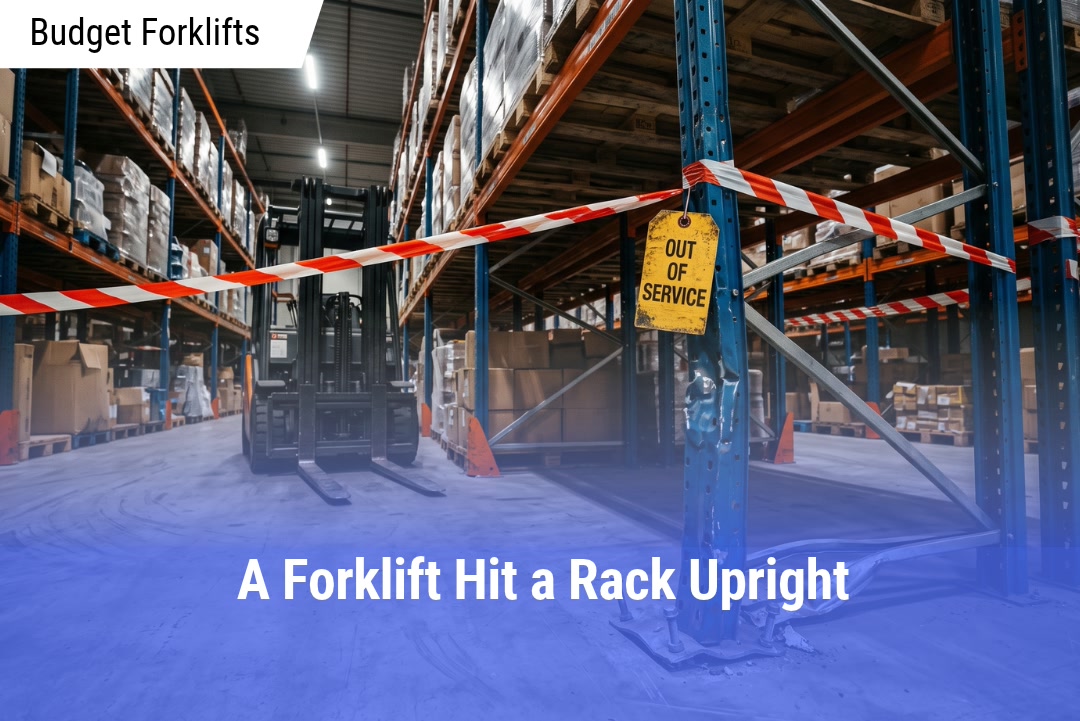
A Forklift Hit a Rack Upright: When to Evacuate, Isolate, or Stop Operations
A forklift hit a rack upright? Learn when to evacuate, isolate, or unload the bay, how to judge column damage, and what to check on the truck afterward.
October 22, 2026
Blog Post
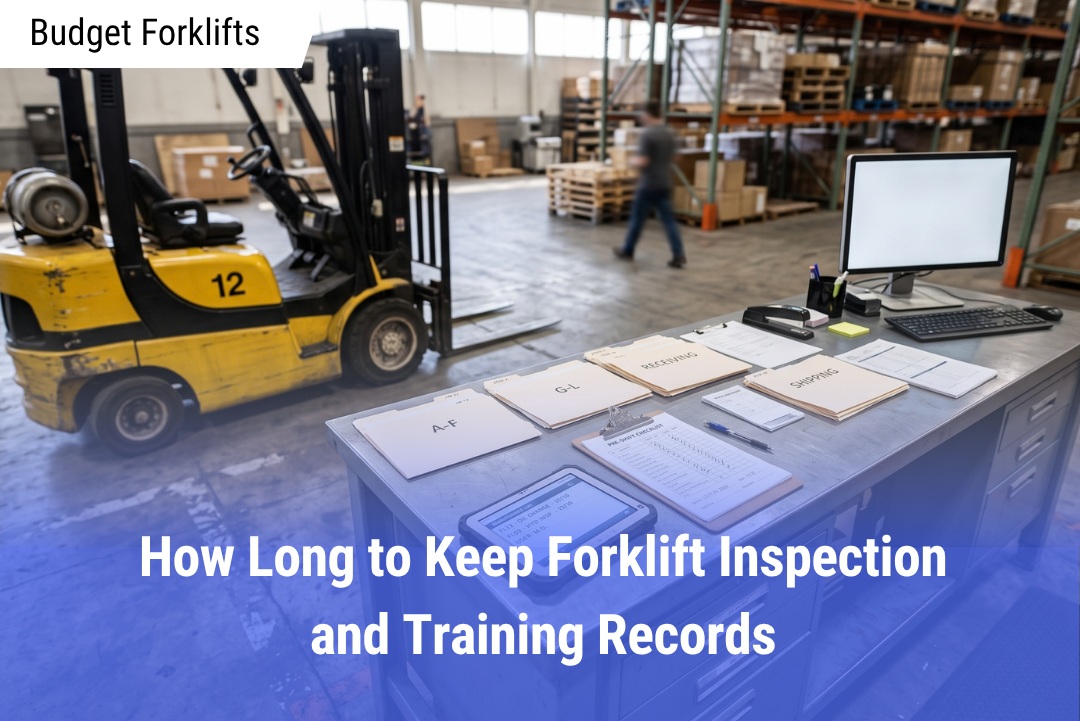
How Long to Keep Forklift Inspection and Training Records (What OSHA Actually Requires)
Federal OSHA does not set a retention period for forklift inspection records or for operator training records. The policy most safety managers can defend is simple: keep daily inspection sheets for at least 12 months, keep every defect and repair record for the life of the truck, and keep each operator’s certification for as long […]
September 29, 2026
Blog Post
What Causes Forklift Battery Failures?
Forklift batteries are the lifeline of electric lift trucks, yet many owners and operators face unexpected breakdowns that stop work and cut into productivity. Forklift Battery Failures are more common than most people realize, and they usually don’t happen overnight. It builds up from habits, work conditions, and small mistakes that add up over time. […]
September 20, 2025