Blog Post
A Forklift Hit a Rack Upright: When to Evacuate, Isolate, or Stop Operations
| | 13 min read
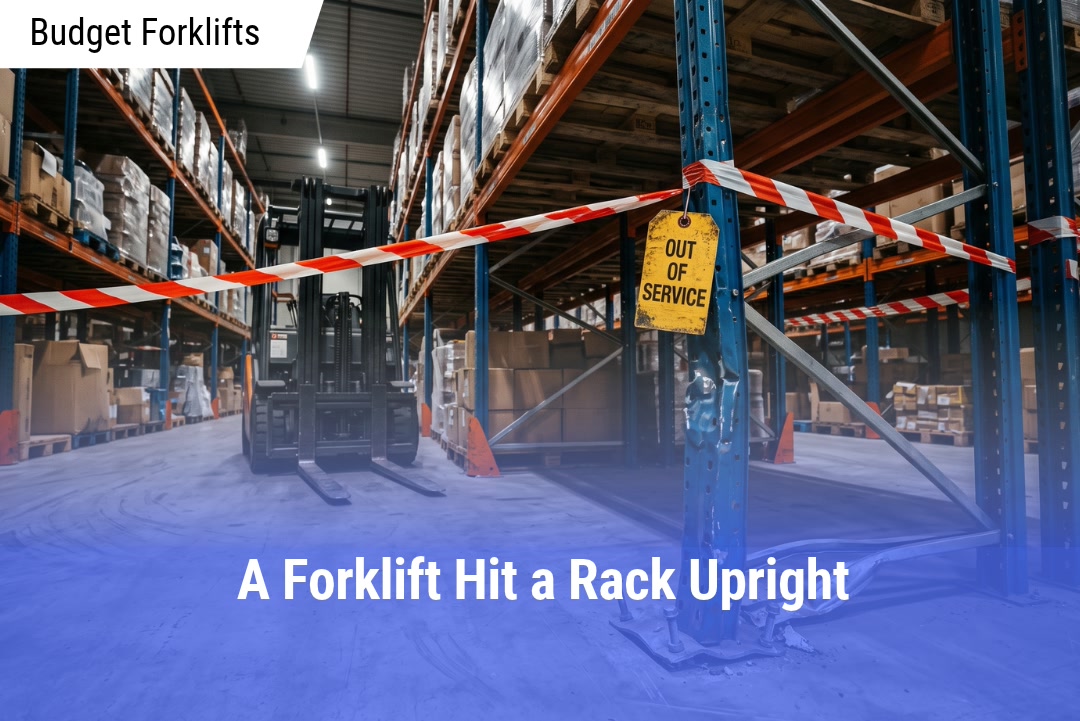
A forklift hit a rack upright? Learn when to evacuate, isolate, or unload the bay, how to judge column damage, and what to check on the truck afterward.
A forklift that clips a rack upright can leave the frame standing, quiet, and fully loaded, yet only one more bump away from failure. In one OSHA fatality investigation, an operator backing a rider forklift across an aisle struck a single upright support. That support, a second one, and three sections of storage rack came down, and he was crushed under the falling cartons.
What you do in the first five minutes matters more than the repair you schedule next week. Below is the response sequence we walk customers through after a rack strike: what to do immediately, when to clear people out entirely, how to judge the damage, and what to check on the truck before it goes back to work.
Key takeaways: the three-tier response
- Evacuate when the structure is already moving: a leaning frame, a sheared anchor, a dislodged beam, shifting product, or noise from the steel.
- Isolate and unload when an upright is visibly dented, bent, twisted, or torn but the frame is stable.
- Cordon and inspect when you only see a scuff or a struck guard. Nothing goes back into service until a trained person has checked it.
What should you do in the first 60 seconds after a forklift hits a rack upright?
Stop the truck where it is, call a verbal stop for the aisle, and keep everyone out of the fall zone of the struck bay and the bays beside it. Do not back the forklift away until someone confirms the mast, carriage, or forks are not still in contact with the rack.
Work in a fixed order: operator, people, structure. Check the operator first, because hitting a fixed steel object even at walking speed can cause whiplash or a knock against the overhead guard. If the forks or mast are touching the rack, leave the controls alone. Lowering, tilting, or reversing can pull a beam out of its connector or drag a pallet off its seat. If the truck is clear of the rack, lower the forks to the floor, neutralize the controls, and set the parking brake.
Then clear pedestrians from both sides of the row. On back-to-back racking, product can fall into the next aisle over, so that aisle needs to be emptied too. Look at the structure from a distance before anyone walks up to it.
When we are called in after a rack strike, the mistake we hear about most is the operator reversing straight out to see what happened. With a fork tip lodged against a frame brace or a mast hooked behind a beam, that single move can pull the structure along with the truck.
When should you evacuate the area instead of just roping off the aisle?
Evacuate the surrounding aisles if a frame is leaning, an anchor or footplate has sheared, a beam has lifted out of its connector, product has shifted, or the steel is making noise. Each of these means the load path has already failed, and a collapse can travel down the row.
Racking fails progressively. One upright gives up its share of the load, the beams hand it to the neighboring frames, and those frames were never designed to carry it. The OSHA case above shows how a hit on one support took down two supports and three sections. The ANSI MH16.1 rack standard overview treats leaning frames as a major warning sign of imminent structural failure, and notes that broken or loose anchors reduce the frame's ability to resist movement.
Clear the area and stop all forklift traffic nearby if you see any of these:
- A frame that is visibly out of plumb or still moving
- A footplate lifted, torn, or sheared from its anchor
- A beam end that has jumped its connector or lost its safety lock
- Pallets that have slid, tilted, or started to overhang the beams
- Creaking, popping, or dust and debris falling from upper levels
- More than one upright struck in the same incident
Two conditions raise the risk further. A single free-standing row has no back-to-back partner to brace it, so the same damage is more dangerous there than on a double row tied with row spacers. Damage to the corner of a column is also more critical than damage to its face. In a red situation, nobody unloads anything until a qualified rack professional has assessed the structure.
Evacuate, isolate, or unload: how do you decide?
Match what you see to a response tier. Signs of structural failure mean evacuate, visible deformation means isolate and unload under supervision, and a scuff with no deformation still means a cordon until a trained person clears the bay.
| What you see | Tier | Immediate action | Who clears it |
|---|---|---|---|
| Leaning frame, sheared anchor, dislodged beam, shifting product, noise from the steel | RED: Evacuate | Clear the row and both adjacent aisles, stop traffic, do not unload | Storage rack engineer or qualified rack inspector, on site |
| Kinked, torn, or ripped column, broken brace weld, deep damage low on the upright or at a corner | RED: Isolate | Barricade the bay and its neighbors, unload only as the rack professional directs | Rack professional, then repair or replacement |
| Visible dent or bend in a column or brace, frame stable, product secure | AMBER: Unload | Cordon, controlled top-down unload, tag out of service, schedule repair | Trained inspector measures and approves the repair |
| Paint scuff only, or a column guard took the hit | GREEN: Inspect | Short cordon, check the guard, column, footplate, and anchors behind it | Trained in-house inspector, logged with photos |
When you are torn between two tiers, choose the higher one. A cordon that stays up an extra hour costs almost nothing. A bay reopened too early can cost a life.
How do you tell if upright damage is serious?
Treat any dent, bend, twist, or tear in a column as structural until it has been measured. Common inspection practice flags a column for repair when it is deflected more than about half an inch in any direction, torn or ripped at all, or damaged near its base or at a corner.
The quick field check uses a straight edge. Hold a straight steel ruler or level against the concave side of the damaged area, centered on the dent, and measure the largest gap. Check the column from the front, from the side down the aisle, and at the corner, and inspect both the front and back legs of the frame. Many inspectors also hold frames to roughly half an inch out of plumb per ten feet of height.
Location changes the risk. The base of an upright carries the full weight of every level above it, so a dent at knee height is more serious than the same dent near the top. Damage behind a beam connector is easy to miss because the connector hides it. Check the horizontal and diagonal braces for bends and cracked welds, and look up at the beam connectors and safety locks in the bays above the impact point.
Footplates and anchors deserve their own look. A forklift hit low on the upright can twist the plate, shear the bolt, or crack the concrete around it. If an anchor pulled out or the concrete broke away, the problem may be in the floor as well as the rack, which is why it pays to know whether your warehouse floor slab can handle the loads sitting on it.
One rule has no exceptions: never bend a column back into shape. Straightening cold-formed steel restores the look of the upright, not its strength.
Is it safe to unload a damaged rack bay, and how should you do it?
Unload only after a supervisor confirms the frame is stable and not moving. Work from the top level down and from the damaged bay outward, with one trained operator, a spotter outside the fall zone, and nobody on foot beneath the rack.
A controlled unload follows a fixed sequence:
- Put up physical barriers at both ends of the aisle, not tape alone.
- Station a spotter well outside the fall zone to watch the frame and call a stop.
- Start with the highest pallets in the damaged bay, then work down, then move to the neighboring bays.
- Lift each pallet straight up and back out slowly. Do not side-shift or drag a load across a beam.
- Stage the removed pallets well away from the damaged run.
- Stop immediately if the frame moves, creaks, or the damage gets worse, and treat the bay as red.
The truck matters as much as the method. A forklift's rated capacity falls as the load goes higher and its center moves forward, so check the forklift data plate for the capacity at the height of your top pallets before you start. Our guide to how much weight a forklift can carry explains why a truck that handles a pallet at floor level may not handle it safely near the top beam. A slow, careful lift also keeps the load well behind the forklift fulcrum, which is where tip-over margin comes from.
When customers call us for help with a damaged bay, our first question is how high the top pallets sit. The truck that hit the rack is often not the right one for a careful high-level unload, and it may need inspection before it works again anyway. If your fleet is short, a short-term forklift rental covers the unload and the repair window without forcing a damaged truck back into service.
Can operations continue in the rest of the warehouse?
Yes, once the struck bay and the bays beside it are behind physical barriers and the aisle is closed to traffic. The rest of the building can keep running, but nothing goes into or out of the damaged section until it is repaired and formally cleared.
Tag the bay as out of service at both aisle ends and block those locations in your warehouse management system so no one is sent there to pick or put away. Reroute forklift traffic so trucks do not pass the damaged run, and brief every shift, because the next crew did not see the incident.
The repair itself is either a replacement upright frame or an engineered repair kit approved for your specific rack. Field welding, heating, and bending a column back are not acceptable fixes. The bay reopens only after the person who assessed it signs off in writing, and that sign-off goes into your incident log with photos of the damage and the finished repair.
What should happen to the forklift and the operator after a rack strike?
Take the truck out of service until the forks, carriage, mast, overhead guard, and hydraulic lines have been inspected, because an impact strong enough to bend rack steel can crack a fork heel or damage a mast channel. The operator needs a check for injury, then a review of what caused the strike.
Rack strikes are behind a large share of the trucks that come into our service shop with bent fork tips, gouged mast channels, or a hydraulic hose rubbed through. Operators often describe the hit as a light tap, and the steel usually tells a different story. Inspect these points before the truck runs again:
- Forks: cracks at the heel, bent or uneven tips, and fork locks that still seat properly
- Carriage and load backrest: bends, cracked welds, and loose fasteners
- Mast: channel damage, roller wear, and even chain tension
- Hydraulics: lift and tilt cylinders, hoses, and fittings for leaks or abrasion
- Overhead guard and steering: deformation and smooth, even response
- Tires and wheels: chunking, cuts, and rim damage
Tires can also be part of the cause. A truck on tires that are past their limit takes longer to stop and steers less precisely in a tight aisle, so check whether it is time for replacing your forklift tires. If the truck that hit the rack was rented, look at what your forklift rental damage waiver covers before the repair bill arrives.
On the operator side, OSHA's powered industrial truck rule requires refresher training when an operator is involved in an accident or a near miss. Treat the review as fact-finding, not punishment. Look at speed, aisle width, visibility, load height, and whether the operator was trained on this type of truck. Keep the incident report, the refresher training, and the truck's post-repair inspection together with your forklift inspection and training records.
How do you stop rack strikes from happening again?
Fix the cause, not the symptom. That means column guards and end-of-aisle barriers, a truck that fits the aisle, refresher training, and a no-blame reporting rule so every hit gets logged and inspected.
Most strikes happen at the aisle ends and on the lower few feet of the upright, where a truck turns into or out of the aisle. Bolted column guards and end-of-row barriers absorb those hits before they reach the steel that carries the load. Remember that a guard which takes a hit still transfers force, so the upright behind it needs checking.
When the same uprights are hit again and again, the cause is often the truck, not the driver. We regularly see long counterbalance trucks working aisles that were laid out for something more compact, and every turn becomes a near miss. Comparing a reach truck versus a counterbalance forklift for your aisle widths is often cheaper than replacing uprights every quarter, and our guide to choosing the right forklift for your warehouse walks through the turning-radius and lift-height questions to ask.
Finally, make reporting easy. If operators fear discipline, hits go unreported and damage stacks up unseen. Pair a no-blame reporting rule with a monthly in-house rack walk and an annual inspection by a qualified rack professional, and log every finding with a location and a photo.
Frequently asked questions
Do I have to report a rack strike to OSHA?
Only if it leads to a work-related fatality, which must be reported within 8 hours, or an inpatient hospitalization, amputation, or loss of an eye, which must be reported within 24 hours. Property damage alone is not reportable, but documenting every strike internally shows how you handled the damage if an inspector ever asks.
Can I use a rack repair kit instead of replacing the upright?
Yes, if the kit is engineered and approved for your specific rack type and installed exactly as directed. An unapproved or improvised repair can leave the frame weaker than the damage did.
Who is qualified to clear a damaged rack for service?
A storage rack engineer or a trained rack inspector with experience assessing structural damage. A supervisor can cordon and unload the bay, but should not sign off on its structural safety.
Does a column guard that took the hit mean the upright is fine?
Not necessarily, because the guard can pass part of the impact into the column, the footplate, or the floor anchors behind it. Check the guard and everything it protects before reopening the bay.
Conclusion: treat every rack strike as structural until proven otherwise
A rack that is still standing is not the same as a rack that is safe. After any forklift strike, stop the truck where it is, clear people from the fall zone, and read the structure before anyone touches it. A leaning frame, a sheared anchor, shifting product, or noise from the steel means evacuate. Visible deformation means isolate and unload under supervision. Even a scuff means a cordon until a trained person has checked it.
Then look past the rack. Pull the truck for inspection, retrain the operator, log everything, and ask whether the truck, the tires, or the aisle layout made the strike likely. The fastest way to prevent the next collapse is to fix the reason the forklift hit the upright in the first place.
Related articles
Blog Post
Will Your Warehouse Floor Slab Hold the Forklift You’re About to Order?
Most warehouse floors were poured for whatever equipment was moving through the building at the time, not for whatever you’re about to buy. If you’re upgrading to a heavier truck, that gap between “what the floor was built for” and “what you’re about to put on it” is worth checking before delivery day, not after […]
September 15, 2026
Blog Post
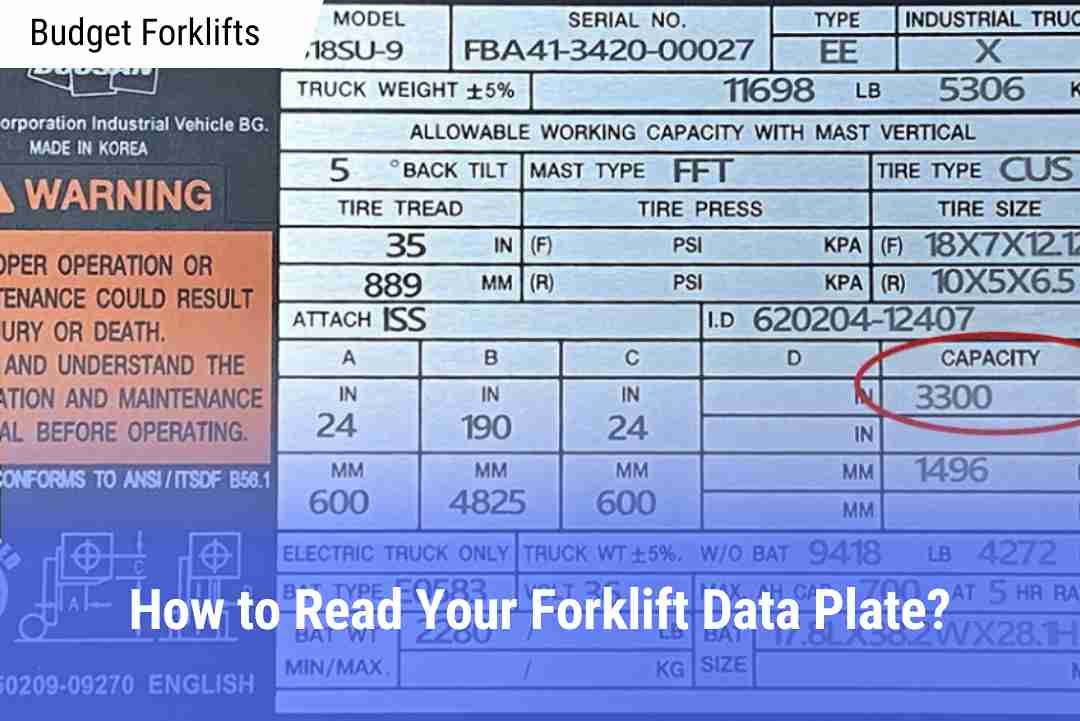
How to Read a Forklift Data Plate: A Safety Guide
A forklift data plate is the metal tag that tells you exactly how much your machine can safely lift, and under what conditions. It is required on every powered industrial truck, and reading it is the only way to know your real lifting limits before you pick up a load. Table of Contents Also called […]
February 2, 2026
Blog Post
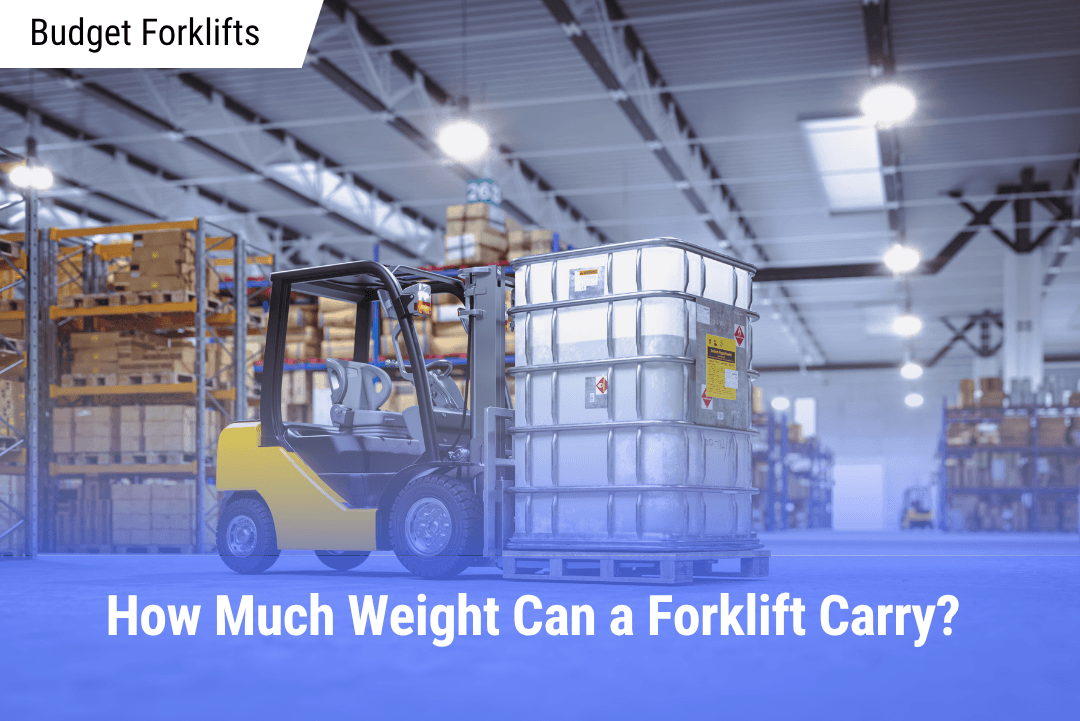
How Much Weight Can a Forklift Carry? Capacity & Safety Guide
A standard warehouse forklift carries between 3,000 and 8,000 lbs, while heavy industrial models can exceed 100,000 lbs. The exact number for any single machine depends on its load center, lift height, and any attachments installed, all of which are listed on the forklift’s data plate. Lifting a load that exceeds a machine’s rated capacity […]
March 24, 2026